Kearny sits along the Gila River in Pinal County, Arizona — a century-old copper and ranching town of about 2,000 people. In 2026 its surface-water allotment was cut to 77 acre-feet, triggering a declared water emergency. This page tracks the facts, the response, and the path forward — updated as the situation changes.
"What makes the desert beautiful is that somewhere it hides a well."
The drought is local. The legal threats are statewide. The federal deadline is national. And Kearny's answer — two confirmed deep granite-vault wells — is sitting right beneath the town's feet, waiting on a single filing that could change everything.
Kearny's immediate water emergency is real and it is being fought — hard. But there is a second crisis forming on a different timeline, and it is just as dangerous. The rules governing every drop of water in the American Southwest are being rewritten right now, and communities that don't act before the rules are finalized will spend the next generation living under whatever they're handed.
Seven states have missed multiple federal deadlines to agree on how to share the Colorado River after 2026. The federal government is now proposing to replace Arizona's hard-won prior appropriation seniority with pro-rata cuts — equal percentage reductions for everyone, regardless of how old or senior your water rights are. Arizona's Governor has already offered to give up 27% of the state's river allocation just to stay at the table.
At the same time, the 1935 Globe Equity Decree — the same ruling that slashed Kearny's allotment to 77 acre-feet — extends its reach over any groundwater connected to Gila River subflow. But Kearny's confirmed Vault wells punch below 800 feet into a granite formation that may sit outside the Decree's jurisdiction. Under Arizona's prior appropriation doctrine, the first municipality to file on that deep water would hold senior rights to it — ahead of every claim that comes after. Formal hydrogeological confirmation is the step that makes that protection legally durable.
Mine dewatering operations and tribal water adjudications in this region are active today. Mayor Stacy and the Town Council have full legal standing to file under A.R.S. § 45-151. The wells are in the ground, and the hydrology is being professionally verified now. Every month without a filing is a month any competitor can establish seniority first.
A federal court ruling governing all Gila River-connected groundwater. Kearny's allotment was cut from 610 to 77 acre-feet under this decree. Any well above 800 feet is subject to it. Kearny's Vault wells go deeper — but only a filed prior appropriation makes that protection legally permanent.
Seven states remain deadlocked. The feds are proposing pro-rata cuts for all users — bypassing prior appropriation seniority entirely. Arizona has already offered a 27% reduction. That cut lands hardest on communities with no independent, legally secured water source.
Active mining operations in the Kearny region are pursuing dewatering permits drawing from the same deep formations as the Vault wells. Under Arizona's prior appropriation doctrine: the entity that files first holds senior rights — permanently. Every day of inaction is a day a competitor can file ahead of the Town.
Below 800 feet, Kearny sits above a confirmed deep granite-vault aquifer — camera-inspected, water present, below Globe Decree jurisdiction. With a prior appropriation filing and MARS recharge, this becomes a permanent water bank no federal compact can ever reassign.
Three forces are converging on Kearny's water supply. The first is a severe, prolonged drought that has drained Coolidge Dam to less than 0.05% of its capacity. The second is a 91-year-old federal court decree that places Kearny last in line for every remaining drop. The third is a set of competing legal claims that could challenge any unguarded groundwater right.
Arizona is in the grip of a mega-drought unprecedented in modern recordkeeping. Coolidge Dam — the sole source of Kearny's water allocation — has drained to roughly 377 acre-feet out of its ~910,000 acre-foot capacity (USGS, June 7 2026) — its surface down more than 13 feet since January 1 and falling every month since March. Snowpack ran at just ~25% of normal. No monsoon relief in sight. The taps are running on borrowed time.
~377 AF — <0.05% (Jun '26)A federal court decree that divides Gila River water among competing users. Kearny's rights are "junior" — established later than neighboring communities and tribal nations. Under the prior appropriation doctrine, senior rights drink first. When the dam runs dry, Kearny is the first to be cut off. In 2026, that cut was devastating: from about 610 acre-feet down to 77.
610 → 77 Acre-FeetWater rights attorneys representing senior appropriators and tribal nations could challenge any loose or unexercised groundwater claim along the Gila River corridor. Without clear legal standing on Kearny's deep wells, the town risks losing access to the very infrastructure sitting beneath its feet.
Legal Battle LoomingBefore conservation efforts began, Kearny was on track to hit "zero water day" by July 15, 2026. You turn on your faucet and nothing comes out — for any purpose. Drinking, bathing, cooking, sanitation — all gone. That's not a hypothetical. That's the trajectory Mayor Stacy communicated in the April 8 emergency letter.
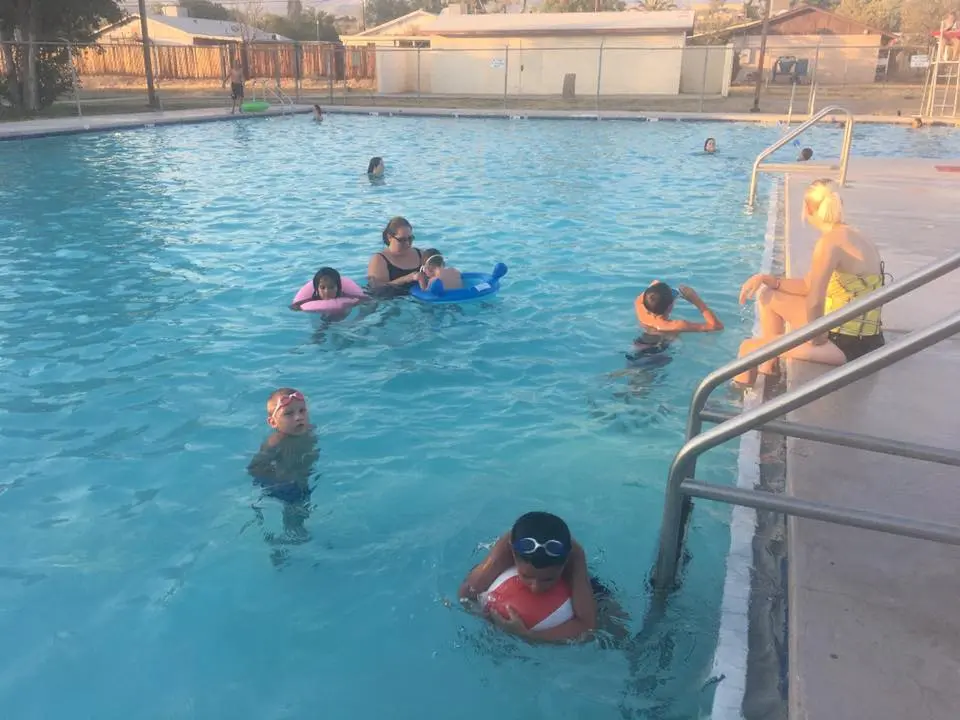
Originally: July 15, 2026The Kearny town pool wasn't just a pool. It was where kids learned to swim. Where families gathered on summer afternoons. Where the community came together. Now it sits empty — a concrete monument to what this crisis has already taken.


"When you drain the pool, you don't just lose water.— A Kearny Resident
You lose the heart of a community."

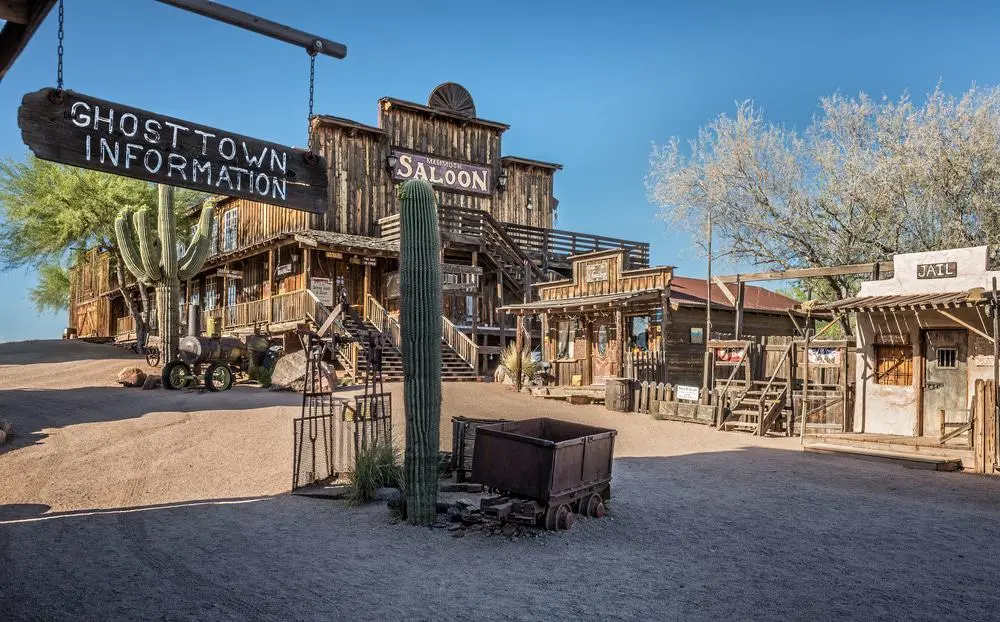
Arizona is full of ghost towns. Places where the mine closed, the well went dry, or the people just gave up. Kearny has watched it happen to its neighbors. The abandoned buildings. The empty streets. The silence where children used to play.
This will not be Kearny's fate. Not if Mayor Curtis Stacy and the Town Council have anything to say about it. Not if the residents who have already cut their water usage by nearly a third have anything to say about it. And not if the MARS technology beneath their feet lives up to its promise.

When the Gila Water Commissioner delivered the devastating news — 77 acre-feet for all of 2026 — Mayor Curtis Stacy didn't flinch. He declared a Level 5WE Water Emergency under A.R.S. § 26-311, implemented immediate mandatory conservation, and began mobilizing every resource available to secure Kearny's water future.
Under his leadership, the Town has activated emergency well rehabilitation, opened negotiations with ASARCO and Resolution Copper, engaged the Governor's Water Policy Office, secured a USDA-funded well rehabilitation contract, and pursued EPA grant funding through Congressman Crane's office.
"There are 2,000 people here that I am responsible for."
— Mayor Curtis Stacy
The results speak for themselves. Residents cut usage by nearly a third, and by early June 2026 the Town had secured temporary “priority water” from the Decree area — enough to ease restrictions all the way down to Level 1WE (voluntary conservation). But the Town has been clear this reprieve is almost certainly temporary: it ends the moment a senior-rights holder calls for that water. Conservation and borrowed water buy time — they don't win the fight. That's where MARS and Project 88 come in.
Securing Kearny's future means engaging everyone with a stake in the Gila. These are the parties involved in — or relevant to — that effort:
Listed parties are stakeholders in the Gila River system. Inclusion reflects engagement or relevance to the water question and does not imply endorsement of Project 88 or any specific commitment to the Town of Kearny.
Why shallow wells are failing — and why going deeper changes everything.
Most of Kearny's existing water infrastructure was built to tap alluvial aquifers — shallow, sandy layers of river sediment near the surface. These aquifers recharge from rainfall and river flow. The problem? They also lose water to evaporation, and during a mega-drought, they dry up fast. When alluvial wells fail, pumps spin in open air and the taps go silent.
But beneath that alluvial layer sits something entirely different: fractured bedrock. Granite formations riddled with natural fractures that collect and store water deep underground — protected from evaporation, protected from surface drought, and potentially outside the reach of the Globe Equity Decree. This is the water Project 88 is designed to find.
The diagram below shows exactly what's happening beneath Kearny — and why drilling deeper into the granite aquifer isn't just an option. It may be the only path to permanent water security.
Shallow wells draw from river sediment that evaporates rapidly in drought. When the water table drops, pumps hit air. That's exactly what's happening in Kearny right now — and across the American Southwest.
Fractured granite at 1,000+ feet stores water in natural vaults, shielded from evaporation and surface conditions. Deeper wells accessing this formation could tap a completely independent water supply — drought-resistant and, if confirmed, legally distinct.
"Whiskey is for drinking; water is for fighting over."
And Kearny is ready to fight.
In 2025–2026, Beeville, Texas faced a severe water crisis as Lake Corpus Christi — its primary surface source — fell toward record lows. City leaders responded by rehabilitating capped wells and drilling new ones, backed by a $35 million bond, to tap groundwater beneath the failing surface supply. That groundwater is brackish and requires reverse osmosis treatment, and officials describe the new wells as a stopgap while longer-term solutions come online. The broader pattern is the point: across the drought-stricken Southwest, when surface water fails, communities are turning to the water beneath their feet. Kearny may already own deep wells worth verifying for exactly that reason — which is what the current hydrological study is for.
"Anyone who can solve the problems of water will be worthy of two Nobel prizes—one for peace and one for science."
Two dormant wells at 1,150–1,250 ft depth with 18-inch casings — capable of 2,000+ GPM if rehabilitated. Infrastructure worth $500K–$1M to replicate, already sitting inside city limits, waiting to be verified.
The Globe Equity Decree governs alluvial subflow — saturated Holocene sediment near the river surface. At 1,250 feet in fractured granite, these wells may access legally separate percolating groundwater outside the Decree's reach.
Stop sending treated effluent downstream for free. Inject it back into the Vault wells and earn ADWR Long-Term Storage Credits — a water bank Kearny owns outright, recoverable on demand under ARS Title 45.
Project 88 operates on a verify-first model. Phase 1 is a site inspection — nearly free. No capital commitment until the data confirms the opportunity is real. The Town risks nothing.
In June 2026, the Town of Kearny engaged Mackenzie and Associates, an independent hydrology firm, to conduct a hydrological study of the basin's deep-well and managed-recharge options — evaluating the Project 88 concept alongside other approaches under consideration.
This is the verification step that determines whether the deep Vault wells can deliver the independent, decree-exempt supply this plan envisions. The idea is no longer just on paper — it's being professionally studied.
Project 88 is an independent citizen initiative and is not an official program of the Town of Kearny. The hydrological study is being conducted to evaluate multiple options; inclusion of the Project 88 concept does not imply a commitment to it.
The wells beneath Kearny tell the story of the town itself. The first holes were hand-dug by homesteaders chasing shallow water along the Gila River bottom. When the copper boom arrived, the mining companies needed industrial water — and they drilled deeper, harder, and wider. Two of those wells punched through 1,100+ feet of fractured granite with 18-inch casing built for high-volume production. They were overbuilt on purpose — drought-resistant infrastructure designed to outlast any dry spell. Today, those two "Vault" wells may hold the key to Kearny's survival. Here is every well within city limits, from the shallowest domestic holes to the deepest assets in the basin.
A note on well numbering: The deep "Vault" wells discussed here (ADWR Sites 23CCC and 23CAA) are separate from the Town's current USDA rehabilitation project (its Wells 3 and 4), which are modest supplemental producers. The Vault wells' high-yield potential is a prospect still pending the hydrological study — not a confirmed figure.
As of the Town's June 4, 2026 update, Kearny is at Water Conservation Level 1WE — voluntary self-regulation. Because temporary priority water is flowing, the harsh 5WE prohibitions have been lifted and residents can live normally again. The Town has cautioned this easing is almost certainly temporary and could revert the moment a senior-rights holder calls for water — so smart conservation habits still matter.
Allowed again under Level 1WE. The Town asks you to keep irrigation to a reasonable minimum and conserve voluntarily.
Allowed under Level 1WE. Good conservation habits are still encouraged.
Pools, spas, and kiddie pools may be filled under Level 1WE.
Flush, shower, do laundry, keep the trees alive. The strict 5WE limits on essential use have been lifted.
Technically permitted, but the Town asks residents to avoid washing paved surfaces and keep practicing good conservation.
Asked to avoid using municipal water for this. Exception: lake water may be used if you pump and haul it yourself.
Capturing grey water from showers and sinks for outdoor plants is still appreciated and encouraged.
Check toilets — the most common hidden leak source. Town staff can assist. Call Town Hall if you need help.
Full data breakdown, dam levels, allotment history, and timeline
Weekly conservation tracking, reclaim rates, and community wins
All 21 wells — depth, casing, water levels, and status
Conservation tips, vendor list, grey water guides, and leak detection
The full MARS strategy, hydrogeological research, and ARS Title 45 framework
The 2026 federal deadline, Globe Decree threat, and Kearny's path to permanent water independence
Share your concerns, stay informed, and join the fight for Kearny's water future
Town Hall, emergency contacts, and Project 88 team
What's causing the smell, the science behind it, and the $1.54M fix underway
Mayor Stacy and the Council are already fighting hard. Residents can strengthen that effort by showing the Town — and outside funders — that the community wants the deep-well prior appropriation filing prioritized. Call Town Hall, or read the message below at the next Council meeting.
“As a member of the Kearny community, I support the Town moving quickly to secure our water future. I urge the Mayor and Council to prioritize a prior appropriation filing on the deep Vault wells (Sites 23CCC and 23CAA) under A.R.S. § 45-151, alongside the hydrological verification already underway. With mine dewatering and competing claims active in the region, filing first protects Kearny’s seniority permanently. Thank you for your leadership on this.”
Project 88 is an independent citizen initiative and is not an official program of the Town of Kearny. This message is a suggested template for residents who wish to express their own views to their elected leadership.
The mines, the tribes, and the state all have a stake in the Gila. If you want to help — or if your organization can contribute — reach out to Town Hall.
📞 Call Town Hall 📊 Read The SituationProject 88 is an independent initiative and is not an official program of the Town of Kearny. Contact information will be published upon formal coordination with Town leadership. For Project 88 inquiries in the interim, please contact Town Hall at (520) 363-5547.